29.4%
of Japan’s population was aged 65 or over in the 2025 census, a record.
Source: Kyodo (via Bernama), 2025 census results.
Proposal · concept only · for discussion
静かに、そばに。 守り · まもり
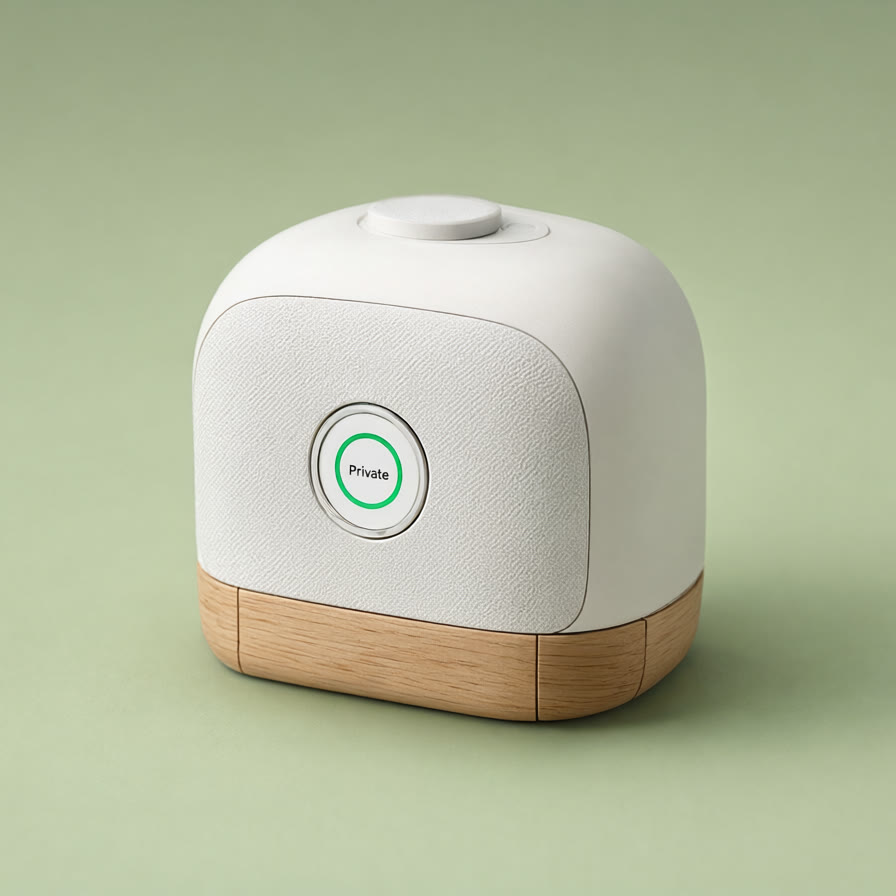
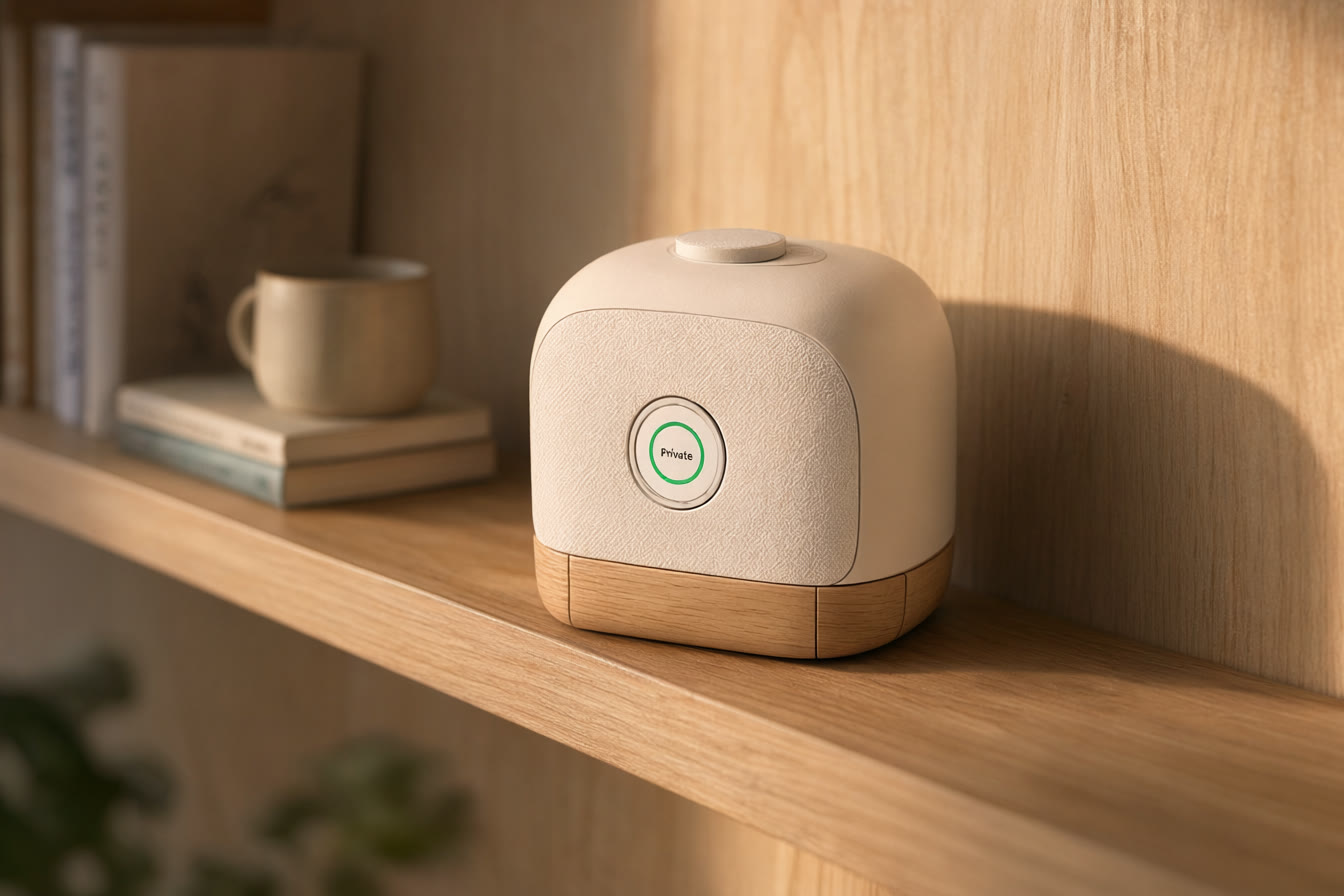
Mamori is a concept for a small tabletop device for an older relative’s home in Japan. It is designed to offer a help button, read the room air, speak to the person at home, work over a SIM even without home Wi-Fi, and keep its microphone off unless you can see that it is on. There is no camera. This page proposes how your company and we could take it from concept to a pilot with families.
1 · The problem and who it is for
An older relative lives on their own at home in Japan. Family lives in another city, or another country. If something happens, how would anyone know? Is the room comfortable? And how do we stay close without watching?
29.4%
of Japan’s population was aged 65 or over in the 2025 census, a record.
Source: Kyodo (via Bernama), 2025 census results.
9.33 million+
people aged 65 or over live alone, a record.
Source: Health Ministry survey, reported by Nippon.com.
400
older Japanese adults in a 2023 survey: cameras and microphones met more resistance than environmental sensors such as temperature or door sensors. Exact percentages were not found.
Source: 2023 survey, published on PMC (article PMC10305305).
$6.2–7.4bn
Global personal emergency response systems (PERS) market in 2025. Sources disagree, so this is a range, not one figure.
Sources: Future Market Insights, 2026 ($6.2bn); Fortune Business Insights ($6.32bn); Global Info Research ($7.38bn).
Japan-only market size: not found. Several figures above come from news reports or search summaries, not the original documents.
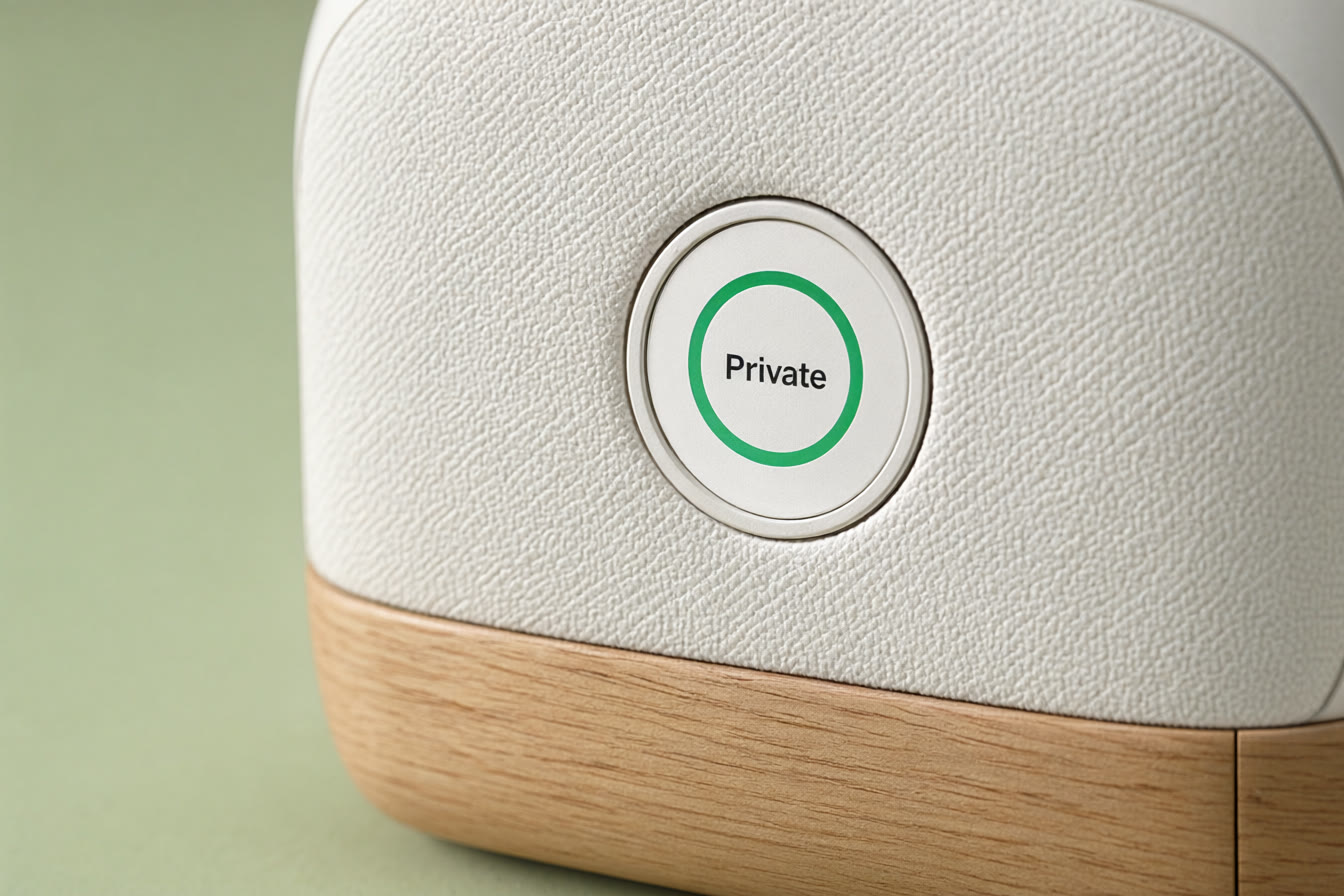
A calm object on a shelf: one help button, a voice that can speak to them, plain notes about the room, and a light ring with one word that shows when the microphone could be on. Nothing that films them.
An alert if the button is pressed, an optional possible-fall alert (a design target), optional short notes about the room, and an optional call, all through one paired family node. Designed to help them notice, not to watch.
2 · The product
Version 2 of the concept. Everything here is design intent, not a tested result.
1 Emergency warning
A press would sound an alarm in the room, turn the light ring red and show “Help called” on the status disc. If a family node is paired, it would send an alert there too, over Wi-Fi or the SIM.
Limit: only helps if the button can be reached. It is not an emergency service and no response is promised.
2 Living signals
PM2.5, CO2 and VOC, temperature and humidity, shown as simple notes like “air looks stale” or “room is cold”.
Limit: room air readings, not health measurements.
3 Possible-fall alert (target)
Mamori would sense motion in the room through Wi-Fi channel-state sensing, with no camera. It is designed to flag a possible fall: a target to be validated in the pilot; not a medical device. A flag would go as an optional alert to the paired node. A partner’s separate sensor becomes optional.
Limit: not validated. It may miss real events or raise false alarms, and it depends on the room and the setup.
4 Optional call
Designed to call a paired family device over home Wi-Fi or the SIM, only with the shutter open. The light ring would pulse amber and the disc would say “Mic on” during a call.
Limit: needs a Wi-Fi or mobile network link. Not an emergency call line.
5 Full privacy
No camera and no image sensor. The shutter is designed to cut the mic’s power, and the mic LED is designed to sit on the mic’s power line, so no light would mean no mic. With the shutter closed it cannot listen, but it can still speak alerts. The wake word would run on the device; speech would go to the cloud only after the wake word, with the shutter open. Sound would not be stored. Raw air readings stay in the home.
Limit: the circuit would need an independent check before anyone relies on it. Cloud speech means spoken requests leave the home. A partner’s optional sensor is a separate device with its own privacy terms.
Honest limits, in short: a concept, not a product. Not tested, not a medical device, and no medical claim. The possible-fall alert is a design target, not validated: it may miss real events or raise false alarms, and it depends on the room and the setup. Alerts need power and a working Wi-Fi or mobile network link. Cloud speech needs a network. Air sensors would need calibration. Mamori is a working name and has not been trademark-checked.
3 · Build steps
Each step ends with a clear decision. We only move on when both sides agree the step is done.
Indicative, to be agreed together. Not a commitment.
1Step 1
Now2Step 2
About 3–4 months3Step 3
About 6 months4Step 4
After the pilot4 · Partnership
A proposal to shape together. Nothing here is fixed.
5 · Next step
Questions to answer together:
See the full concept site, with the privacy lights demo and honest answers.