MamoriConcept

Concept only · working name · not for sale

Quiet care
at home.

Mamori is a concept for a small tabletop device for an older relative’s home. It is designed to offer a help button, read the room air, speak to the person at home, work over a SIM even without home Wi-Fi, and keep its microphone off unless you can see that it is on. There is no camera.

Concept film, 56 seconds, captions in the picture. Device shots are renders and home scenes are AI-generated; not a real product.
Read the film

The film’s ten captions, in order. Everything the film shows is design intent for a concept, not a tested product.

  1. Morning, in a quiet home in Japan.
  2. Many parents in Japan now live on their own.
  3. Their families are often far away.
  4. Mamori is a concept for quiet care at home.
  5. A soft fabric shell on light oak. About 90 mm across.
  6. A ring you can read at a glance: green is private, amber means the mic is on.
  7. One press on top: a local alarm, and an alert to a paired family device. The ring turns red.
  8. A shutter on the side covers the mic and cuts its power.
  9. No camera. No image sensor. Anywhere.
  10. Close to family, without being watched.
  • 0cameras
  • 0image sensors
  • 4ring-light states
  • 1help button
  • ~90 mmacross (about)
  • No camera
  • No image sensor
  • Mic LED designed on the mic’s power line
  • Shutter would cut the mic and calls
  • Help button
  • Room air, not health data
  • Sound would not be stored
  • Not a medical device

The story

Close, without watching

Picture a mother in her eighties who lives alone in a quiet flat in Japan. Her children live in another city, or another country. They call on Sundays, and they wonder how she is in between.

Most ways to keep an eye on someone feel like being watched: cameras, constant check-ins, gadgets that treat a person like a patient. Mamori is designed to do the opposite. It would let a family stay close, and let her stay in charge of her own home.

In the room it would be a calm object on a shelf: soft fabric, light oak and one word on a small disc. It would read the room air, speak when asked, and offer one button for help. There is no camera, and the mic would be off unless its light is on.
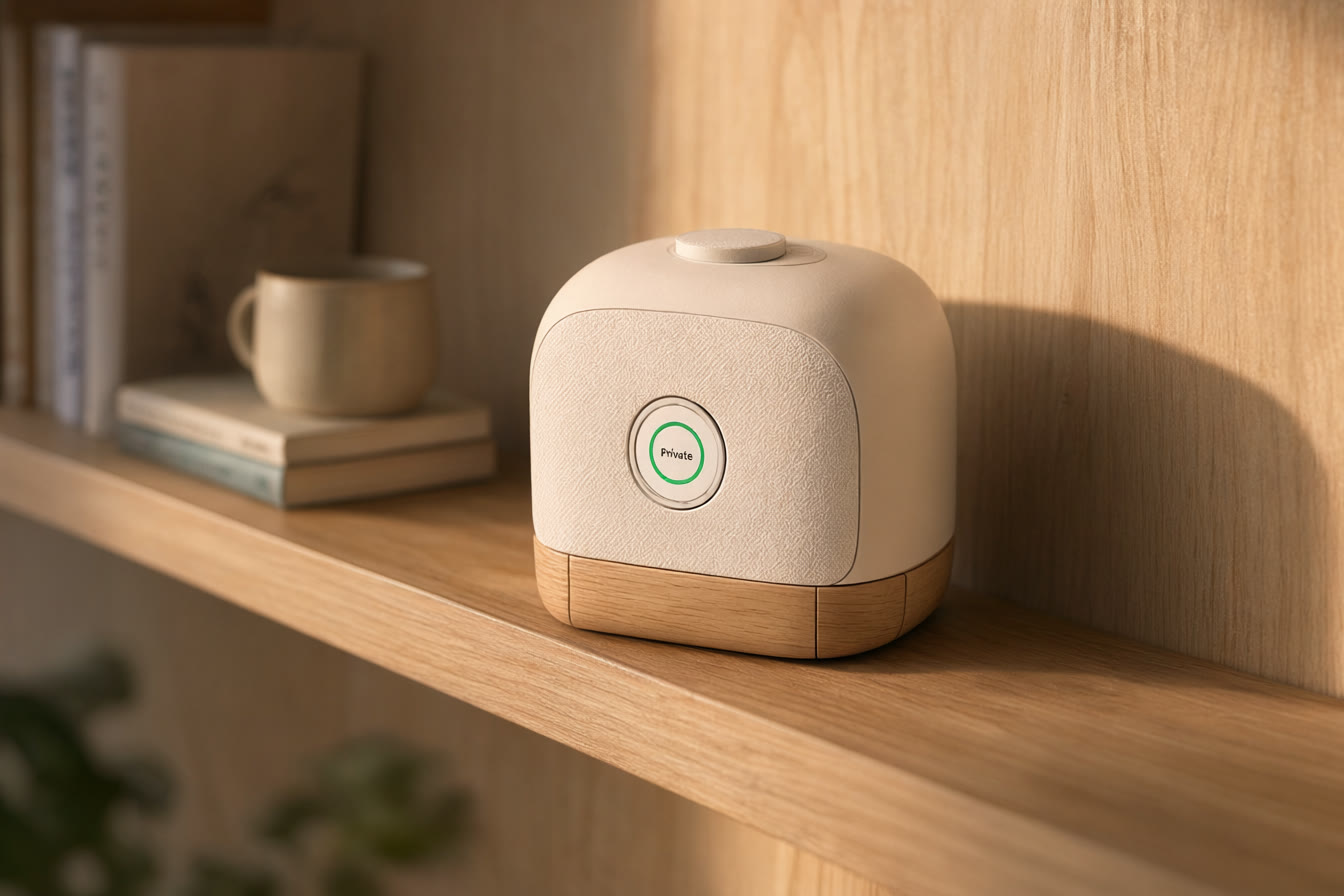
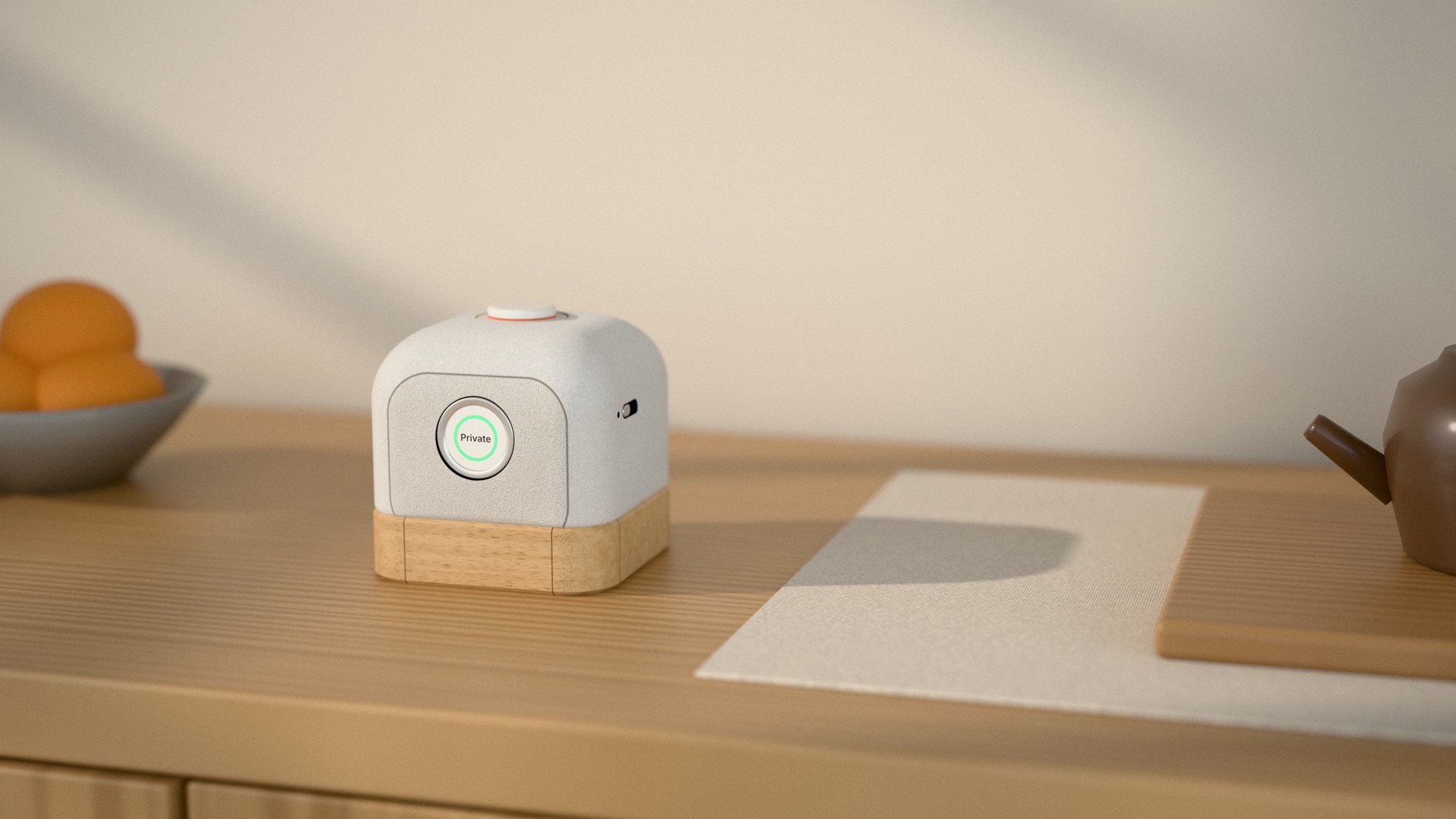
Concept render of the Mamori device on a light wooden shelf in warm light, next to a stack of books and a mug: a white fabric-covered cube on a light-oak base, with a small round help button on top and a round status disc on the front showing a green light ring and the word Private
On a shelf, in warm evening light. Concept render.
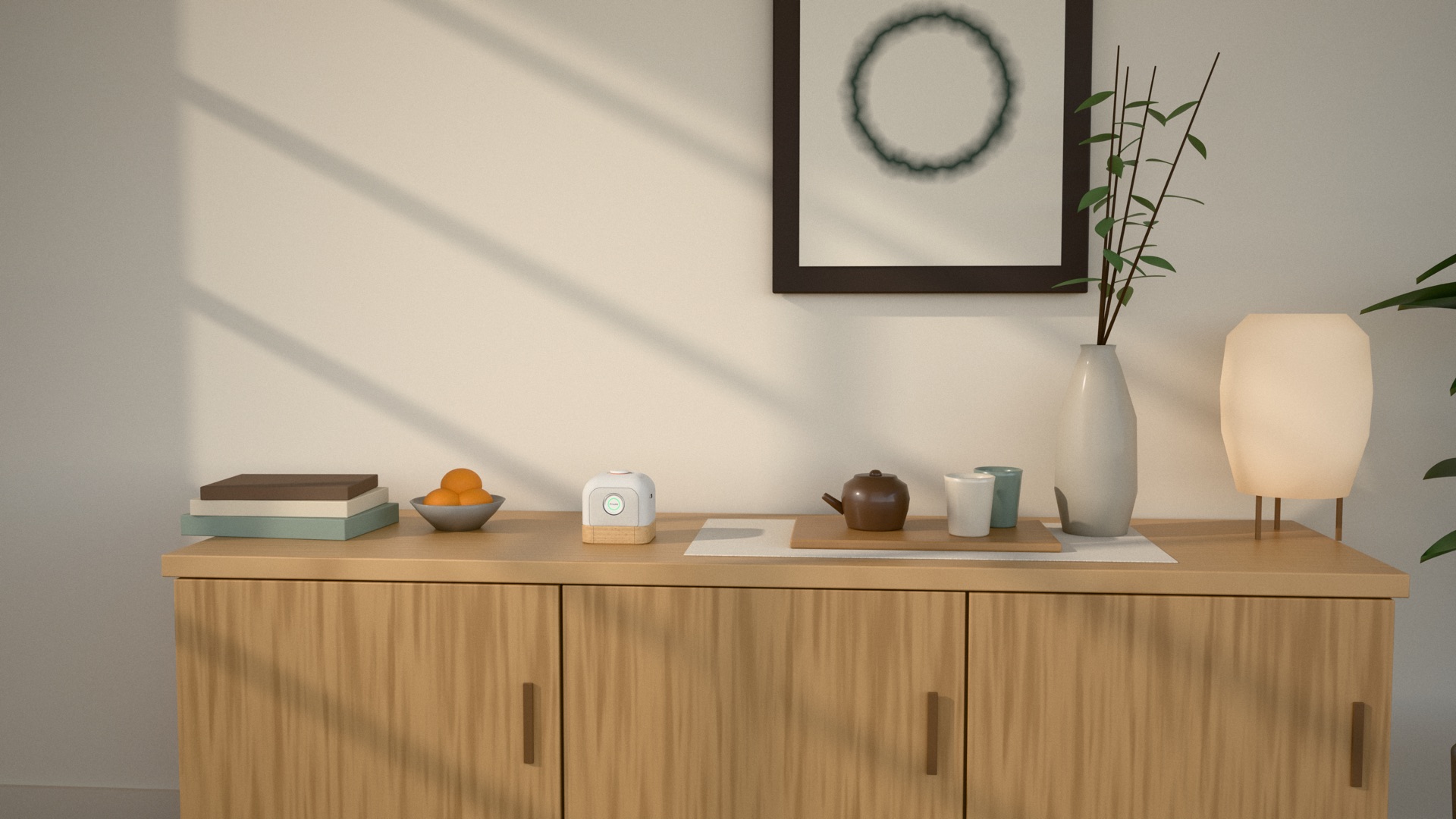
Concept render, not a photo of a real product: a living room sideboard in light wood with books, a bowl of oranges, a teapot and cups, a paper lamp and the small Mamori cube among them, with soft sunlight on the wall
Small enough to sit among everyday things on a sideboard. Concept render.

The idea

Five things it is designed to do

Each one is a design intent, not a tested result. The limits sit right next to the promise.

1 Emergency warning

One help button, a local alarm

A press would sound an alarm in the room, turn the light ring red and show “Help called” on the status disc. If a family node is paired, it would send an alert there too, over Wi-Fi or the SIM.

Limit: only helps if the button can be reached. It is not an emergency service and there is no guaranteed response.

2 Living signals

Room air, in plain words

PM2.5, CO2 and VOC, temperature and humidity, shown as simple notes like “air looks stale”.

Limit: room air readings, not health measurements.

3 Possible-fall alert (target)

Wi-Fi sensing, built in

Mamori would sense motion in the room through Wi-Fi channel-state sensing, with no camera. It is designed to flag a possible fall: a target to be validated in the pilot; not a medical device. A flag would go as an optional alert to the paired node. A partner’s separate sensor becomes optional.

Limit: not validated. It may miss real events or raise false alarms, and it depends on the room and the setup.

4 Optional call

Talk to family, visibly

Designed to call another paired node over home Wi-Fi or the SIM. The light ring would pulse amber and the status disc would say “Mic on”.

Limit: designed to be off while the shutter is closed. Not an emergency call line.

5 Full privacy

No camera. A light you can check.

No camera and no image sensor in the concept. The mic LED is designed to sit on the mic’s power line, so no light would mean no mic. A small shutter on the side would cover the mic and cut its power. With the shutter closed it cannot listen, but it can still speak alerts. The wake word would run on the device; speech would go to the cloud only after the wake word, with the shutter open.

Limit: the circuit would need an independent check before anyone relies on it. Cloud speech means spoken requests leave the home.

Sensor map

Tap a part to see what it would do

About 90 mm across and about 89 mm tall, on a 24 mm oak base.

Concept render of the Mamori device on a light wooden shelf in warm light, next to a stack of books and a mug: a white fabric-covered cube on a light-oak base, with a small round help button on top and a round status disc on the front showing a green light ring and the word Private
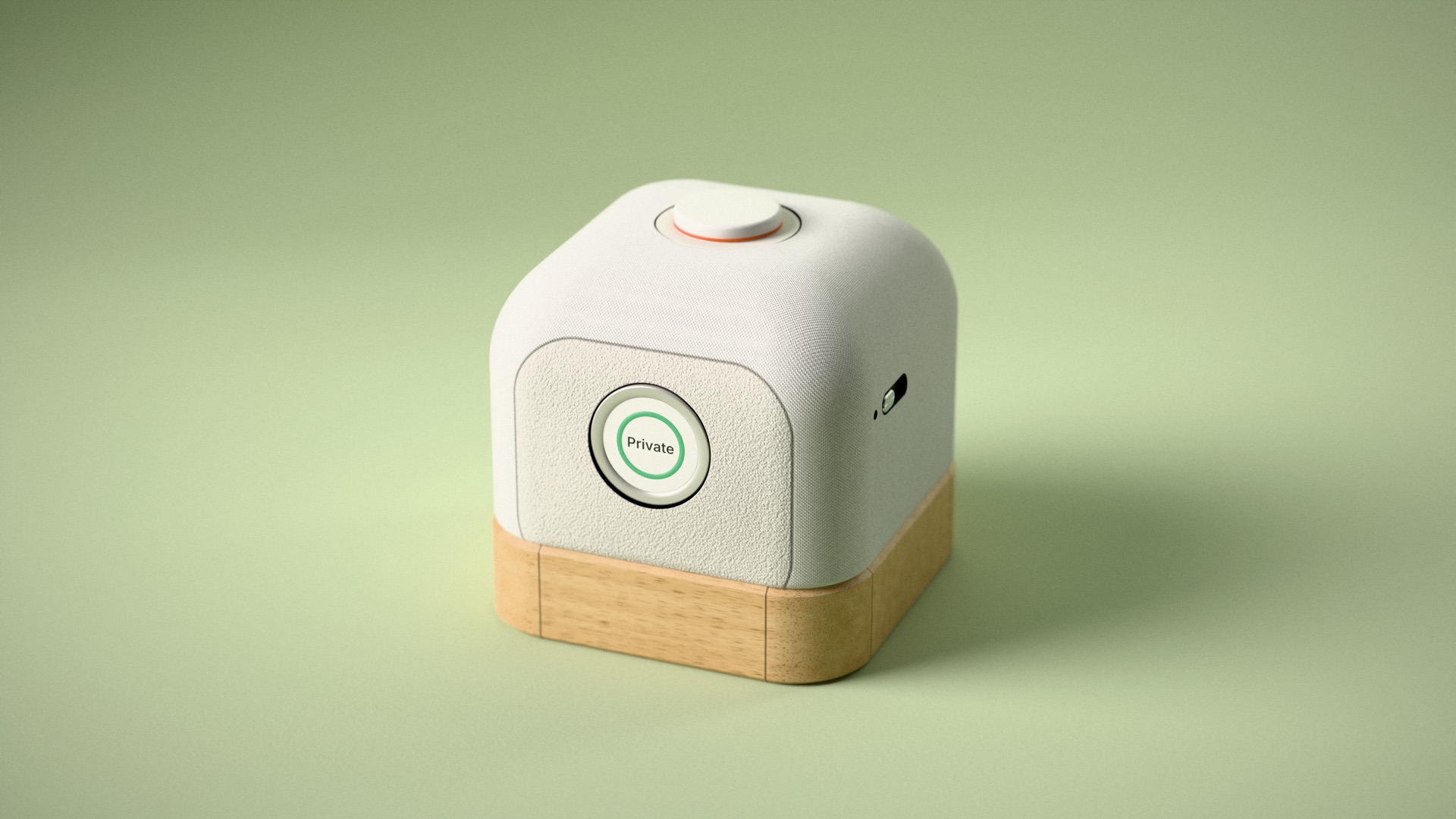
  • Concept render, not a photo of a real product: Three-quarter view: fabric cube, help button on top, Private status disc on the front, oak base.
    Three-quarter view: fabric cube, help button on top, Private status disc on the front, oak base
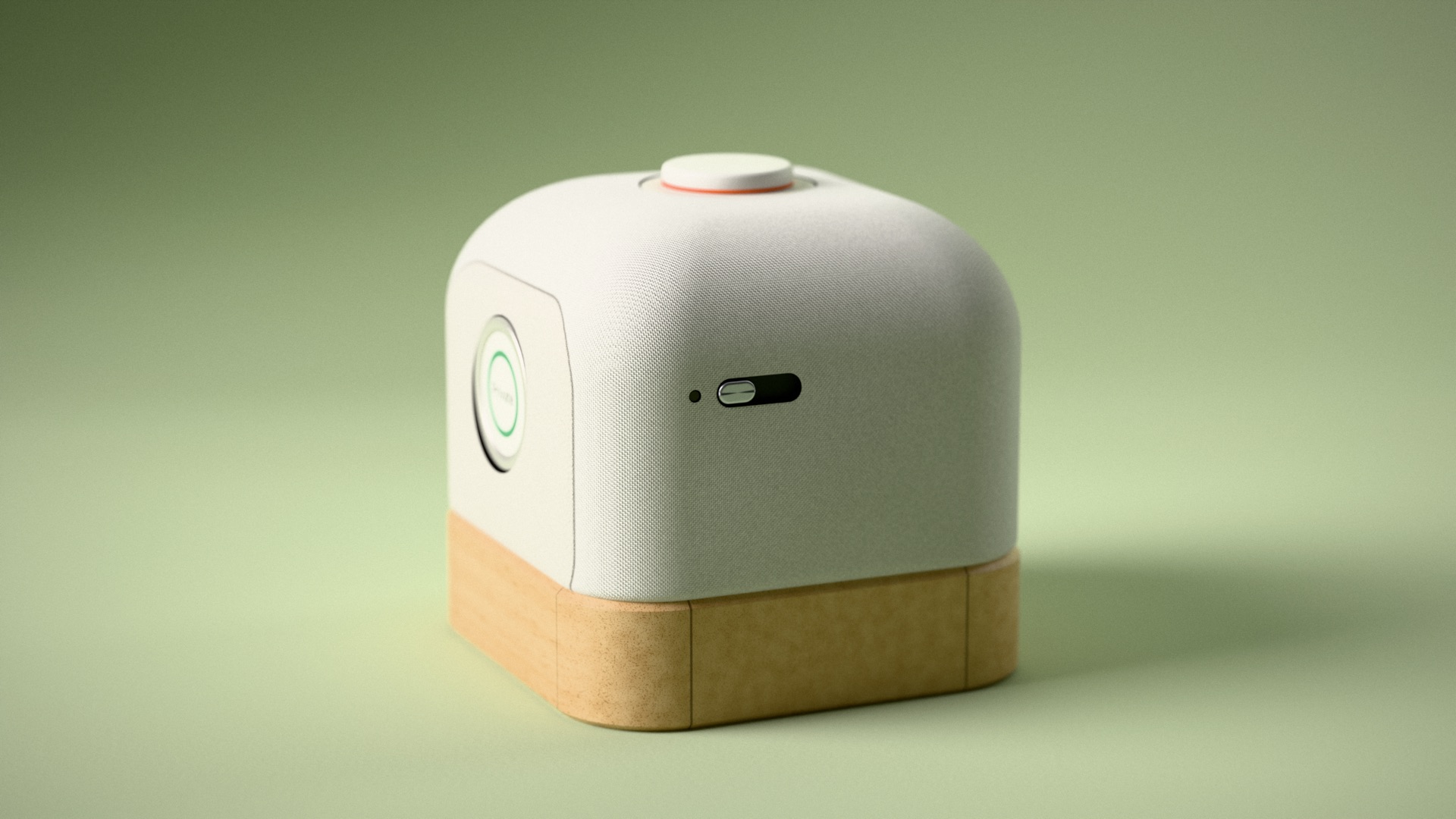
  • Concept render, not a photo of a real product: Side view with the microphone shutter.
    Side view with the microphone shutter
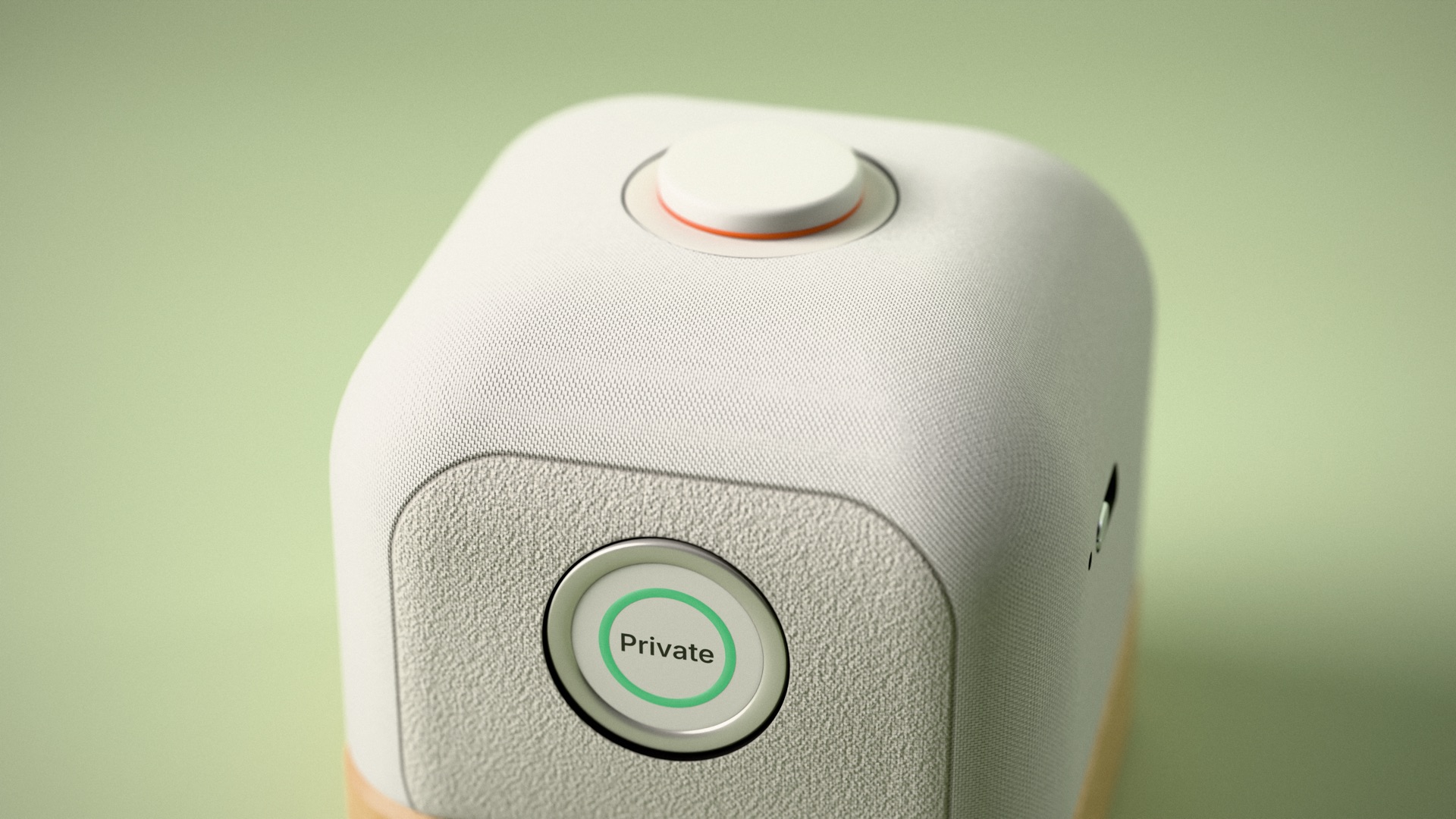
  • Concept render, not a photo of a real product: From above: the help button on top, with the Private status disc below.
    From above: the help button on top, with the Private status disc below
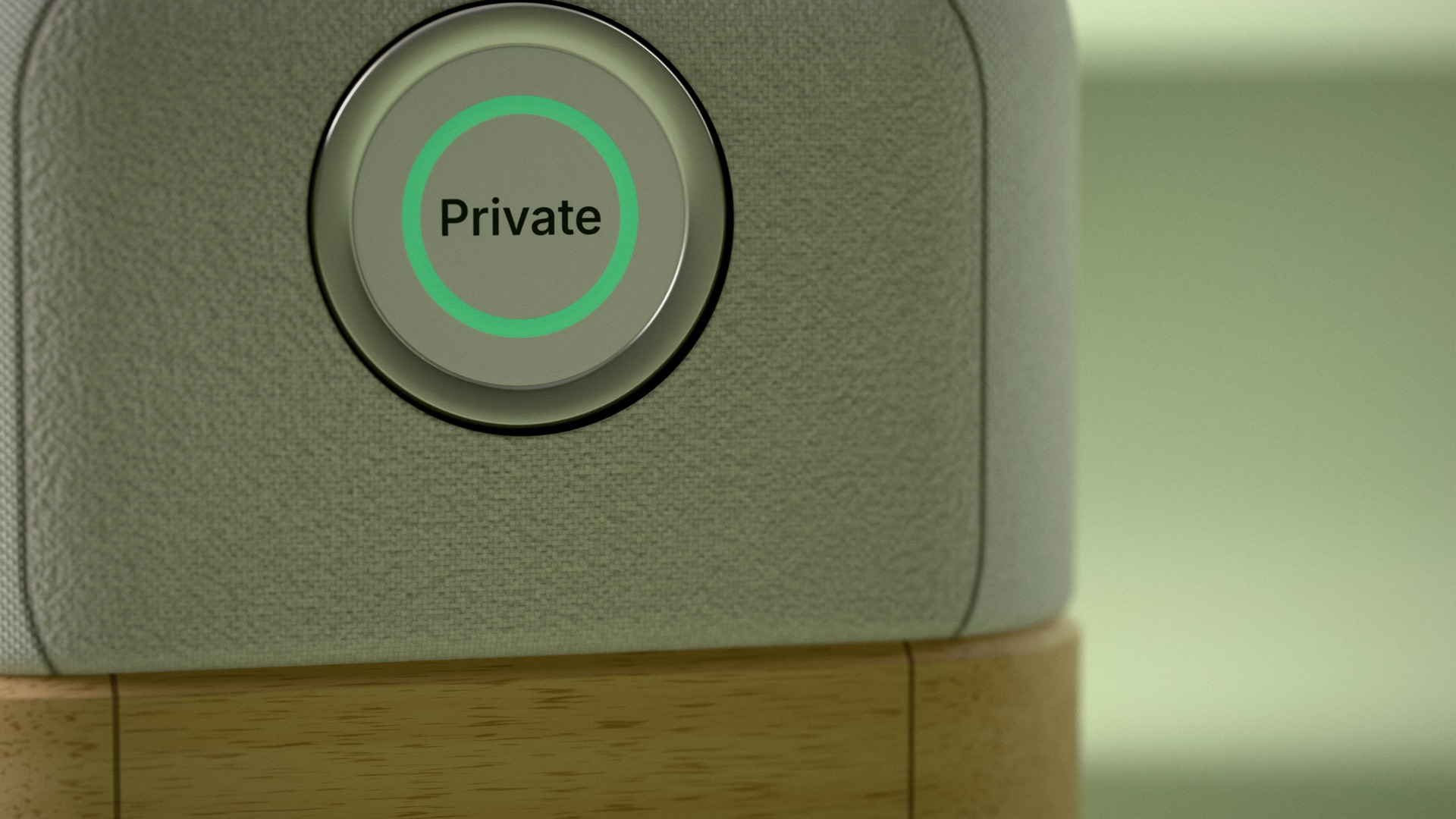
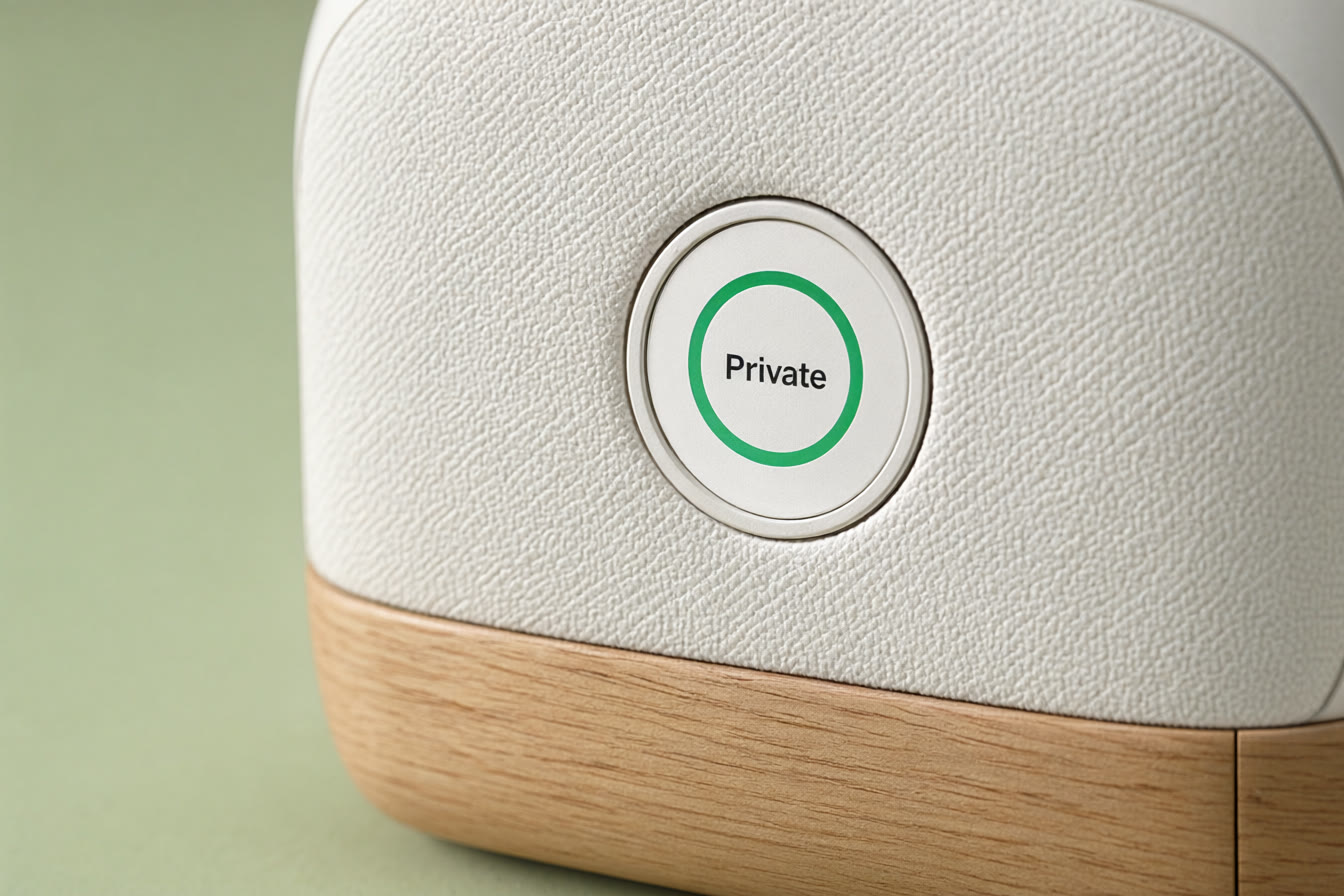
  • Concept render, not a photo of a real product: Close-up of the Private status disc and its green ring, above the oak base.
    Close-up of the Private status disc and its green ring, above the oak base
  • Concept render, not a photo of a real product: On a sideboard in a living room.
    On a sideboard in a living room
  • Concept render, not a photo of a real product: Closer, on the sideboard.
    Closer, on the sideboard

APoint 1 · Emergency warning

Emergency button

A small round help button on top. A press would sound a local alarm, turn the light ring red and show “Help called” on the status disc. If a family node is paired, it would also send an alert there.

Honest limit: only works if the person can reach and press it. It is not an emergency service; there is no guaranteed response.

Privacy, by hardware

Four states, always visible

Try it. The ring, the mic LED and the shutter tell the same story. This is a live demo of the design intent; nothing here uses your microphone.

The concept device showing the privacy state chosen with the controls
Device state
Ring
Green, steady
Mic LED
Off
Shutter
Closed: mic covered (design intent: no power)
Sound
None

Private. The microphone would have no power. It can still speak alerts.

No camera. No image sensor. Anywhere.

The concept has no camera or image sensor, so it is designed to make no images. Sound would not be stored. The built-in Wi-Fi sensing reads changes in the Wi-Fi signal, not images. A partner’s sensor is optional, a separate device with its own privacy terms, which this concept does not control.

How it would work

From the home to one paired family node

A direct link between paired nodes is the intent, over home Wi-Fi or the SIM, so it is designed to work without home Wi-Fi. If nothing is paired, everything stays in the room.

Partner’s sensor (optional)separate, not required

Mamori, at homespeaks · Wi-Fi or SIM · mic off

Paired family nodea phone app or a second Mamori

  • Alerts, only if paired: the help button, and an optional possible-fall alert from the built-in Wi-Fi sensing (a design target, not validated), over Wi-Fi or the SIM. Mamori can also speak alerts in the room.
  • Optional call, both ways: over Wi-Fi or the SIM, designed to run only while the ring is amber and the shutter is open.
  • Partner’s sensor, optional: an extra input, not required; not validated, may miss events or be wrong.

Stays in the home

  • Raw air readings: PM2.5, CO2/VOC, temperature, humidity
  • Sound would not be stored; mic designed to be off by default, behind the shutter
  • Light ring and status disc show the state to the person in the room
  • Wake word would run on the device; spoken alerts play in the room, even with the shutter closed
  • Designed to make no images: the concept has no camera

Sent only to the paired node, if set up

  • Emergency alert when the help button is pressed
  • Optional possible-fall alert from the built-in Wi-Fi sensing: a design target, not validated; not a medical device
  • Optional short summaries, such as “air looks stale”
  • Call audio, only while the call light is amber
  • Spoken requests to cloud speech, only after the wake word and with the shutter open

Living signals

Calm notes about the room

A mock of what the paired node might show. Plain words first, numbers second.

Living room · mock screen

Example values · illustrative only · not live data

Air looks a little stale. Opening a window could help.

PM2.5

12 µg/m³

Looks clear

CO2

840 ppm

A little stale

VOC

Low

Nothing to note

Temperature

22.5 °C

Comfortable

Humidity

48 %

Comfortable

These are room air readings, not health measurements. Low-cost sensors drift and need calibration; a spot near a heater skews them.

Specs

What is in the concept

Design intent, not final engineering

Concept render, close-up: the textured off-white fabric front with the round status disc, a green ring and the word Private, above the light oak base
Material close-up: off-white fabric, a clear status disc and light oak. Concept render.
Mamori concept specs (design intent, not final engineering)
BodySoft off-white fabric cube, about 90 mm across and about 89 mm tall; the fabric is also the speaker grille
BaseLight oak, 24 mm tall, with the nano-SIM tray underneath
Status discRound display of about 30 mm in a 40 mm clear disc, with an RGB ring around it; shows one word: Private, Mic on or Help called
Help button24 mm white button on top, with a thin persimmon edge
Mic shutterOn the right side; closed, it covers the mic and cuts its power
SoundSpeaker behind the fabric and a voice assistant: wake word on the device, then cloud speech
Wi-Fi sensingBuilt in, using the device’s own Wi-Fi radio; designed to flag a possible fall: a target to be validated in the pilot; not a medical device
Mobile linkLTE-M or LTE Cat-1 with a nano-SIM, so it is designed to work without home Wi-Fi
Air sensorsPM2.5, CO2, VOC, temperature and humidity: room air, not health data
CameraNone. No camera and no image sensor

Read the full product spec in the kit

Timeline

From concept to a pilot

Indicative, not a commitment

Rough months from the start of prototyping. A plan, to be agreed, not a commitment. No dates are set. Each stage starts when the one before it is done.

  1. Now

    Concept

    Design, look, this kit: functions, privacy rules, candidate parts, open questions.

  2. Months 1 to 4

    Prototype

    Works-like, looks-like, then EVT. Development boards and 3D-printed shells first; then the first custom board in the real housing (EVT): antennas tuned in the fabric, first Wi-Fi sensing, wake-word and cellular trials, first user feedback.

  3. Months 4 to 7

    DVT and certification

    Production-intent tools and fabric, reliability tests; radio (Giteki), terminal conformity for the cellular part, EMC (VCCI) and the adapter’s PSE; network operator device approval if the operator requires it.

  4. Months 7 to 9

    PVT and pilot

    Pilot units from the production line in a few homes in Japan, with their families; the possible-fall flag (a target, not a medical device) and the voice assistant are to be validated here.

Launch follows, from month 10.

See the full timeline and what can stretch it

Full kit

Every detail, on one set of pages

The spec, the candidate parts, the manufacturing plan, Japan certification, the timeline and the risks. Concept, to be validated in the prototype. Nothing here is tested.

Honest answers

What it is, and what it is not

Is Mamori a medical device?

No. It is a concept, not a medical device, and it makes no medical claim. It would not replace a doctor, a carer or an emergency service.

What about falls?

Not as a proven feature. It is designed to flag a possible fall using Wi-Fi sensing: a target to be validated in the pilot; not a medical device. It may miss real events or raise false alarms, and how well it works would depend on the room and the setup. A partner’s separate sensor could be an optional extra input.

Is there a camera?

No. The concept has no camera and no image sensor, so it is designed to make no images to store or send.

Could the microphone listen without anyone knowing?

The design intent is no: the mic LED would be wired on the mic’s power line, so the mic would not be able to work without the light on, and a small shutter on the side would cover the mic and cut its power. With the shutter closed it cannot listen, but it can still speak alerts. This hardware rule would need an independent check of the circuit before anyone relies on it. Sound would not be stored.

If the button is pressed, will help come?

Not guaranteed. A press would sound a local alarm, which helps only if someone can hear it, and would send an alert to a paired family node if one is set up and the power and the Wi-Fi or mobile network link work. It is not an emergency service.

Does it measure health?

It would read the room air: PM2.5, CO2/VOC, temperature and humidity. Those are not health measurements.

Can I buy it, or sign up?

No. This is a concept for discussion. There is nothing for sale, no account and no paid service. Mamori is a working name and has not been trademark-checked.

Mamori concept film, with sound