Mamori conceptFull kitManufacturing plan
5 · Manufacturing plan
Manufacturing plan
How the fabric cube on oak would be made and tested, phase by phase. No factory is named or chosen.
Concept, to be validated in the prototype. Nothing here is tested.
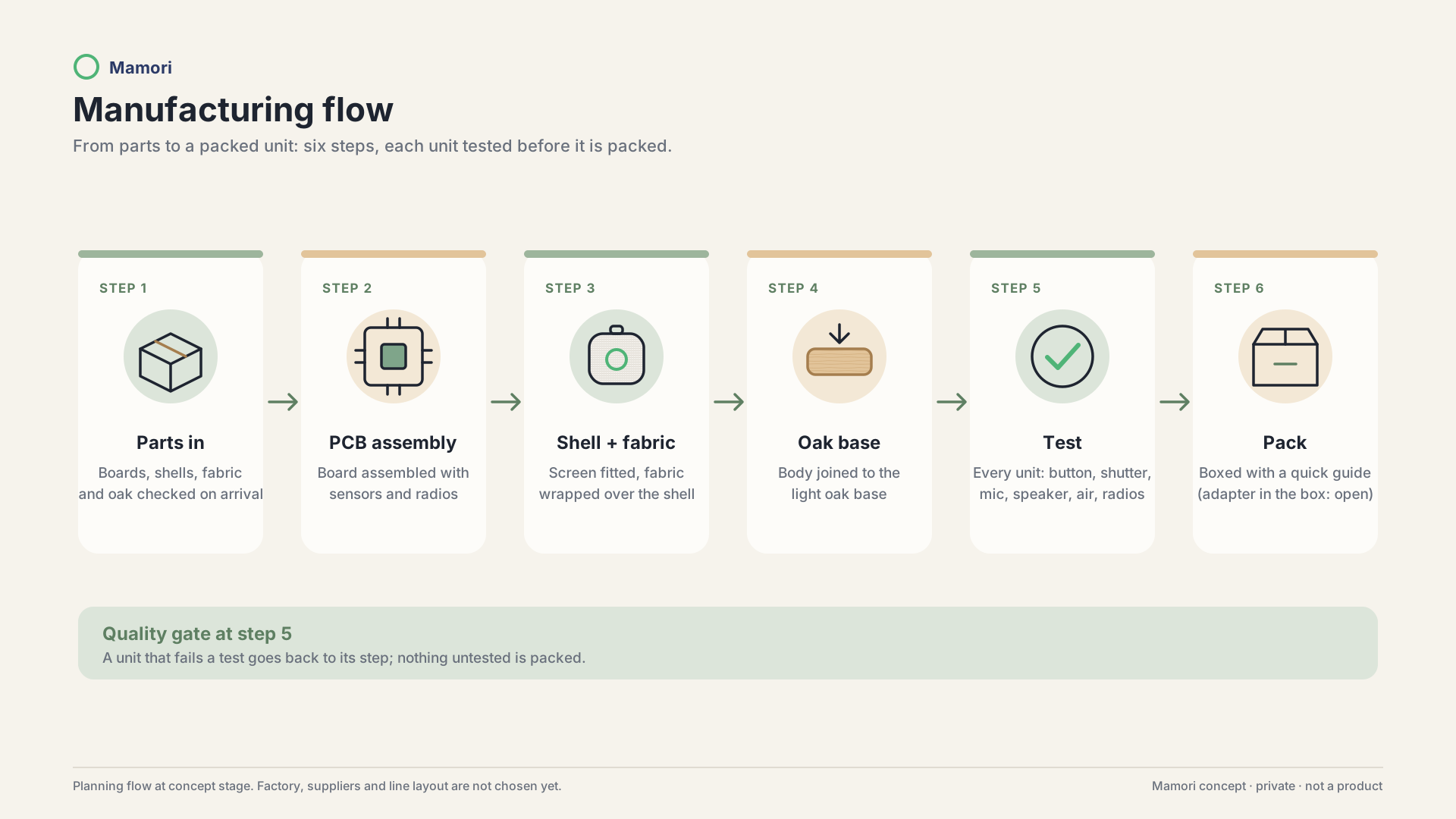
Flow per unit
Route in phases
No factory is chosen. The route below is the usual one for a small consumer device; each gate is a decision point.
- Prototype.
Works-like: development boards, a cellular module board, sensors and a bench wiring of the privacy circuit; first Wi-Fi sensing and wake-word trials. Looks-like: 3D-printed inner shell, hand-sewn fabric cover, CNC or hand-cut oak base. Goal: prove the functions and the size.
- EVT (engineering validation).
First custom circuit board in the real shell size; soft tooling or high-grade prints. All functions on the real board; antenna tuning in the fabric housing; thermal, acoustic and air-flow checks; radio pre-scan.
- DVT (design validation).
Production-intent moulds and fabric patterns; reliability and drop tests; formal radio, terminal and EMC testing; operator approval if needed; user trials.
- PVT / pilot.
Units built on the production line with the production test stations; pilot in real homes to validate the possible-fall flag and the voice assistant; yield and process tuned.
- Small batch.
First sales batch after the pilot sign-off; lessons go back into the next run.
Fabric over an ABS inner shell
- Inner shell: injection-moulded ABS, likely an upper shell and a bottom chassis. Features: speaker chamber, round opening for the display disc, button well, shutter slot, antenna mounts, ribs and screw bosses, snap fits. Its outside is hidden, so no cosmetic texture is needed.
- Tooling steps: 3D prints (prototype) → soft tool for EVT/DVT samples → hardened production tool; first shots checked against the 3D model, then tuned.
- Fabric: soft off-white, acoustically open weave (it is the speaker grille) with no metal threads or metallic coating (so radio passes); checked for sound loss, colour fastness to light, abrasion, pilling and flame behaviour.
- Wrapping: cut to pattern (laser or die), stretched over the rounded edges with tailored corners, bonded with heat-activated film or adhesive on hidden faces, and tucked into a groove that the oak base clamps.
- Display opening: the fabric is cut round around the clear display disc and edge-sealed so it does not fray.
- Option to study: a removable fabric sleeve for cleaning or replacement.
Antennas and speaker chamber
- Antennas: Antenna placement to be set in the prototype (module antenna and LTE antenna kept clear of the oak base), behind fabric only, with clearance from the board ground, the display, the speaker magnet and any metal in the shutter. Each radio module is used with the antenna type its certification covers.
- Antenna tuning: measured in the finished housing (fabric, shell and oak together) in EVT; a different antenna or a changed layout may mean new radio tests.
- Wi-Fi sensing: its behaviour depends on antenna position too, so sensing trials use the real housing, not a bare board.
- Speaker chamber: a closed back volume moulded in the shell, sealed with a gasket; the speaker plays through the fabric, which is the grille; the fabric’s sound loss is measured.
- Microphone: its own sealed path to the shutter opening, isolated from the speaker chamber to help echo cancelling for calls and the wake word.
Oak base
- Solid oak from kiln-dried stock; moisture content checked when wood arrives and before machining (target to set with the wood supplier).
- CNC: outer profile with rounded corners and small chamfers (from the model), inner pocket for parts, USB-C cut-out, fixing holes, and the nano-SIM tray opening underneath.
- Grain runs along the width on every unit; parts sorted for colour and grain so units look alike.
- Sanding, then an oil or hard-wax finish sealed on all faces (also inside) to slow moisture change.
- Wood moves with humidity: fix it with screws in slotted or oversized holes rather than rigid glue, and leave a small gap at the joint with the body.
Circuit board assembly
- Surface-mount assembly by stencil, pick-and-place and reflow; automatic optical inspection; X-ray where parts hide their joints.
- Through-hole or large connectors by selective or hand soldering.
- Sensor modules plug in by cable so they sit near the rear air intake, away from heat.
- Antenna cables or feeds as the module makers specify.
- Test pads for programming and the end-of-line test.
Final assembly
- Sub-assemblies: shell with fabric, speaker, antennas and the display disc with its RGB ring; oak base with SIM tray; main board with cellular module, sensors, round display, button and shutter.
- Join and screw; set the button travel and the shutter feel.
- Load firmware; activate SIM or eSIM profile; pair test.
- Labels: rating label and the required conformity marks, on the label, or electronically where the rules allow (see Japan).
Test
- Functional test (every unit): power, Wi-Fi link, cellular attach, each sensor answers with a plausible value, display pattern and the three words, speaker and mic loop, wake word, button, ring colours.
- Privacy circuit test (every unit): shutter closed → mic supply off, no audio data, no wake word, LED off, spoken alert still works; shutter open → LED on, mic on. Results logged per unit.
- Radio: conducted or radiated check of Wi-Fi and cellular on every unit or a sample, as the test plan sets.
- Air sensors: sample check against a reference instrument in a test chamber.
- Wi-Fi sensing: lab rooms with staged events in EVT/DVT; real homes in the pilot. It is not tested on every unit.
- Reliability (DVT, sample): drop, temperature and humidity cycling (oak and fabric too), button life, shutter life, burn-in.
Packaging
- Moulded pulp or card inserts; a sleeve to keep the fabric clean.
- Quick-start card that shows the ring colours, the shutter and what the voice assistant sends, in large type, Japanese first.
- SIM (if a tray) and adapter in the box only if decided.
- Transport and drop test of the packed unit.